Games
I am a game designer and indie game developer with a background in scientific research and software engineering. I’ve always been driven by a strong creative drive and a love of games, which led me in 2024 to start designing and developing video games. I have created several small games and prototypes and participated in game jams.
As a game designer, I am interested in systems design, world building and narrative design.
I am currently working on my first commercial project, Rescue the Celestia, a space management game which is planned for release in 2026.
Portfolio
Featured project: Rescue the Celestia
Video game in development
First solo commercial project.
Currently in development, started in May 2025, planned release in 2026.
Game description
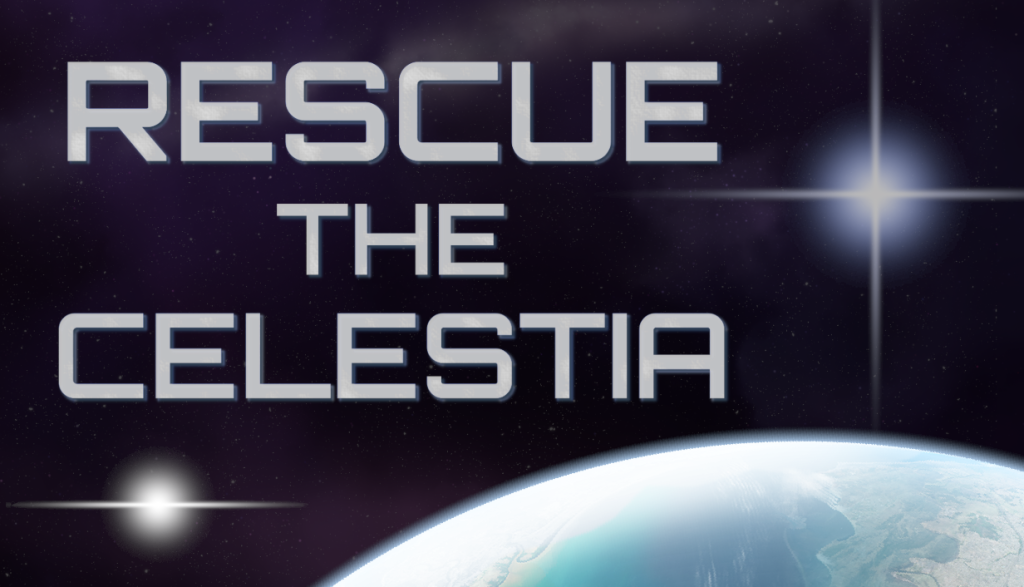
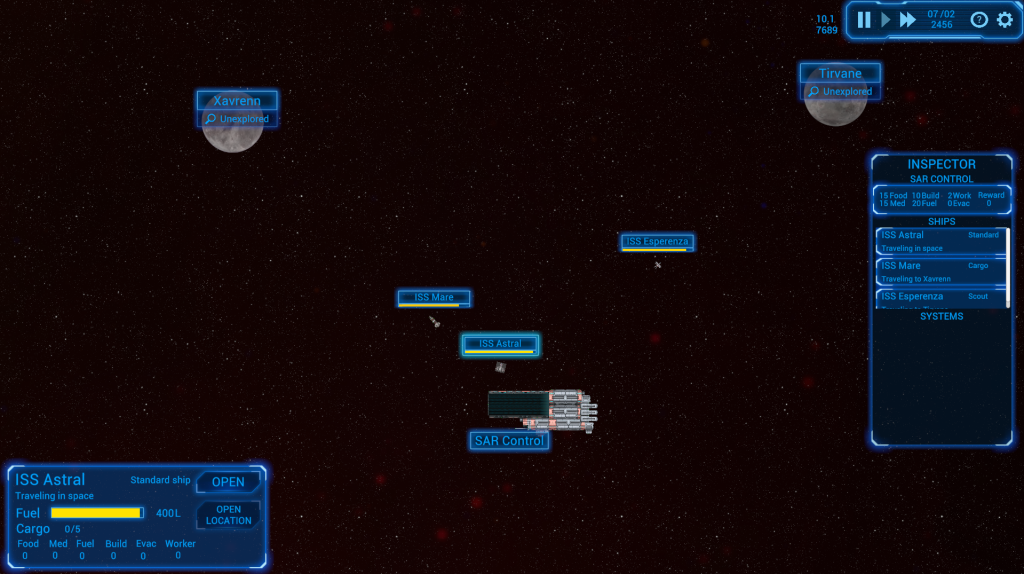
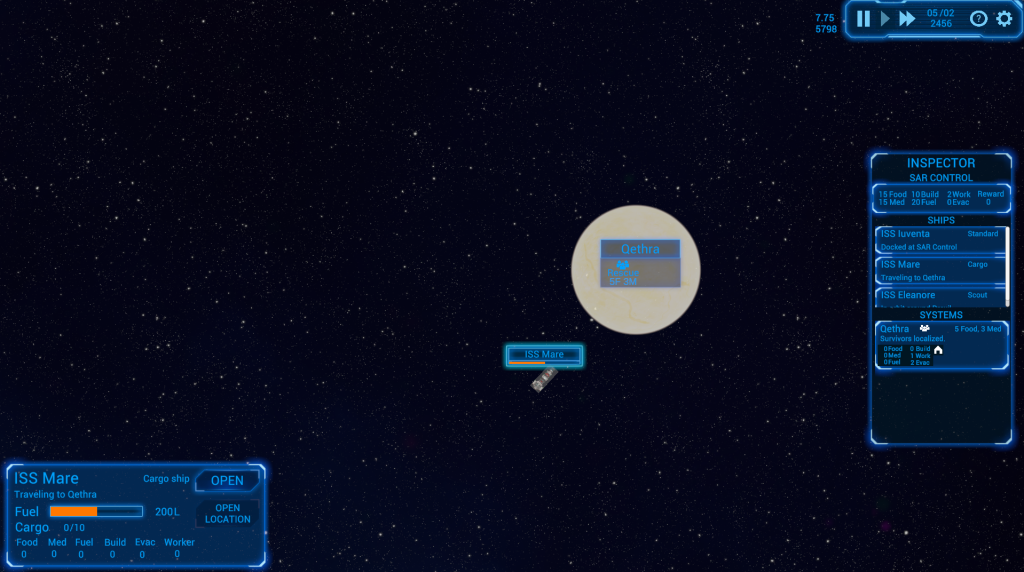
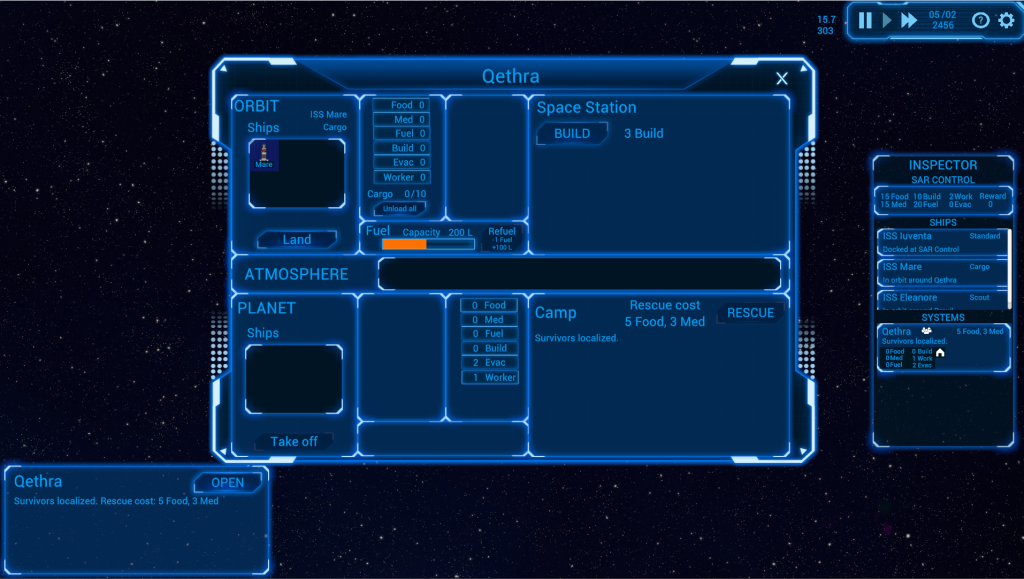
Rescue the Celestia is a space management game where you play as the leader of a rescue operation who must locate and save the scattered crew members of the destroyed ISS Celestia while managing limited resources, building and managing bases, and coordinating a fleet of ships across multiple planets. The game is set in a remote and unexplored region of space and explores themes of survival, space exploration, and hope.
Players have the freedom to approach the rescue operation in their own way, using creative problem-solving to overcome obstacles, adapt their strategy, and find solutions to the challenges they encounter. Over the course of the game, players will experience the responsibility of leading a complex rescue mission while enjoying the satisfaction of finding their own path to success.
Design choices
- Player agency: Give players the freedom to approach challenges in their own way and encourage creative problem-solving.
- Resource production: Players can decide where to produce resources and how to transport them.
- Meaningful choices: More upgrades are available than players can afford, giving them the freedom to explore different strategies and decide which upgrades best fit their approach.
- Narration: Each survivor group has its own story arc, told through dialogue, creating empathy while evoking the mystery and wonder of space exploration.
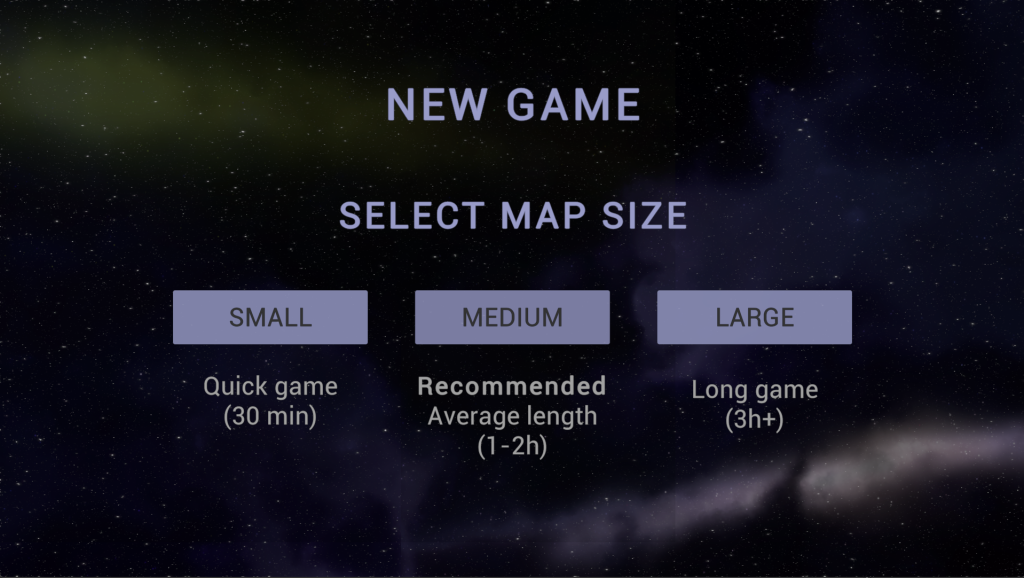
- Procedurally generated map: The map is procedurally generated to introduce interesting strategic constraints and increase replayability.
- A wholesome theme: Instead of maximizing profits or building wealth, the player’s goal is to save people.
My contributions
As the sole developer, I am responsible for the overall design, development and production of the game. My contributions include:
- Game design: Designed and iterated on the game’s core systems through multiple rounds of paper prototyping, playtesting, and balancing.
- Narrative design: Created 21 narrative situations, including dialogue, characters, and story events.
- Programming: Developed the game in Unity, including procedural map generation, user interface systems, and save/load functionality.
- Music: Composed the soundtrack.
- Production: Managed project planning, asset selection and integration, and quality assurance testing.
Game Jam Project: The Hunter Illusionist
Video game jam project
-
Global Game Jam 2026 (48 hours spread on one week).
- Theme: Mask.
-
Team of 2.
-
Role: Game designer, UI/UX designer and programmer.
Game description
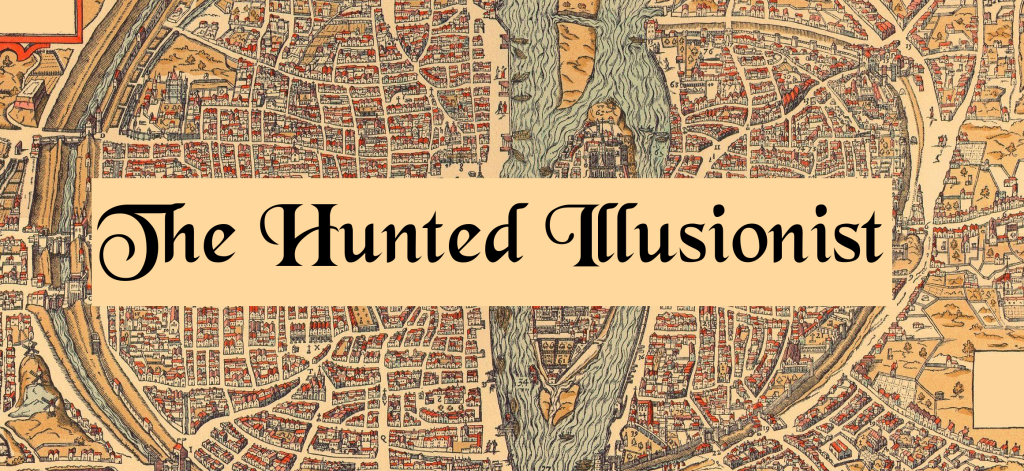
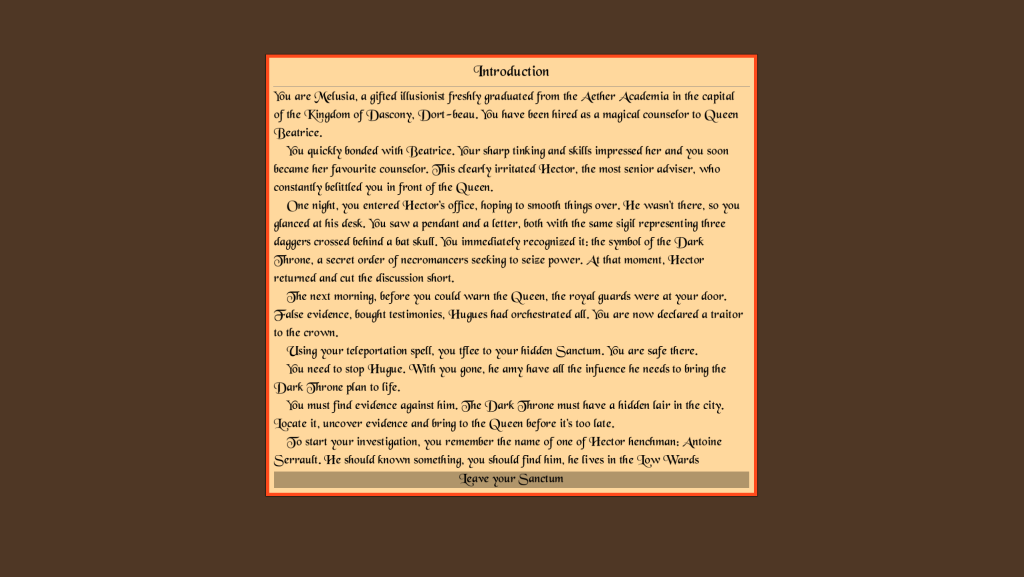
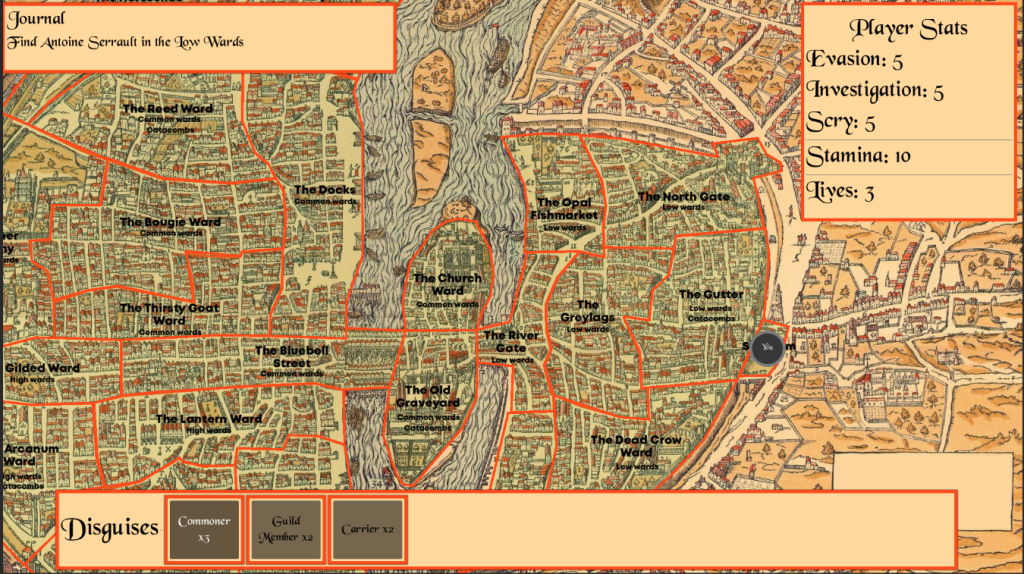
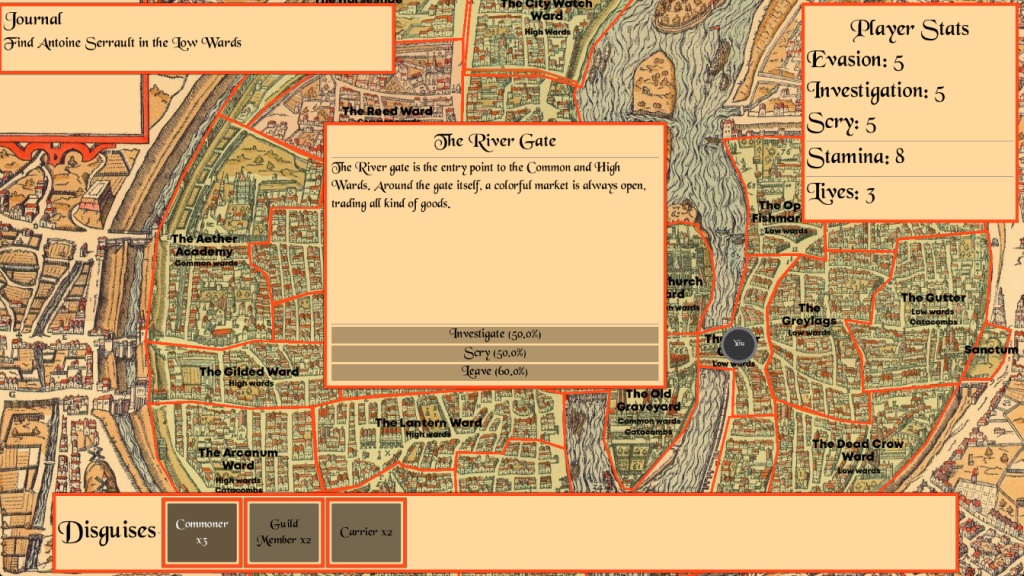
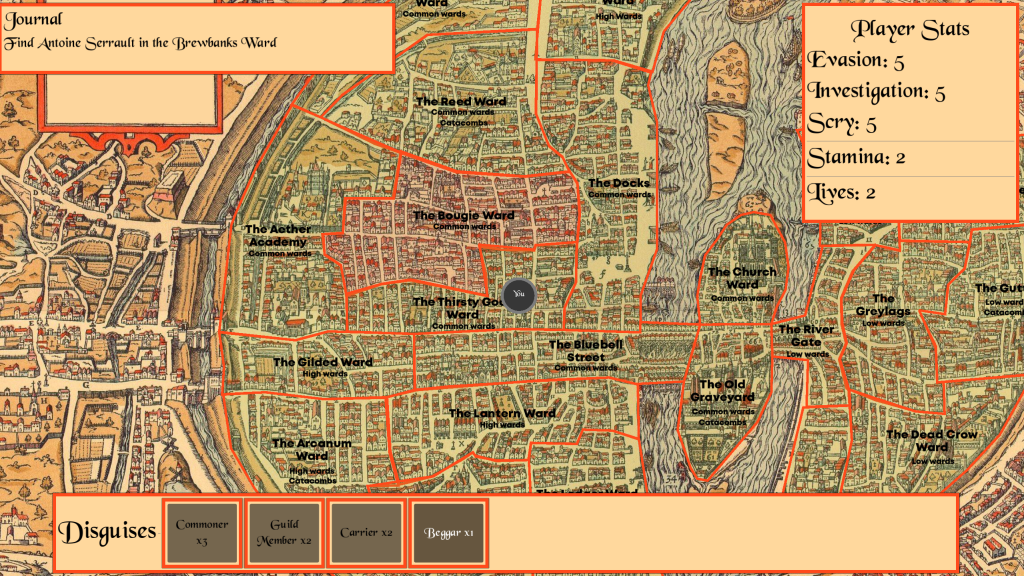
The Hunted Illusionist is an investigation RPG game where you play as an illusionist wrongly accused who must investigate to clear their name while managing limited resources and discovering and selecting disguises to evade the city watch. Set in an immersive medieval city, the game explores conspiracy, survival and the search for the truth. Over the course of the game, players should feel constantly under pressure while remaining empowered to solve problems through their own choices.
Design choices
- Navigation was designed as a resource management system centered on stamina. Every move consumes stamina, player choices trigger a dice roll that may cost additional stamina, and running out sends the player back to the starting area. This risk-reward system creates tension and gives players strong incentive to discover more effective disguises.
- Player agency was a core design pillar. Inspired by immersive sims, the game allows players to decide how they progress by choosing which disguises to use. More disguises are available than required to complete the game, encouraging experimentation, replayability and creative problem solving.
- The starting section of the map, the Low Wards, is naturally isolated from the rest of the map, allowing it to function as an tutorial. Players learn the core mechanics and systems by discovering how to leave this area.
- The Wards were designed and positioned to create a believable and coherent city structure, reinforcing player immersion.
My contributions
- Designed all gameplay mechanics using paper prototypes, including the RPG elements and the disguises system.
- Designed the 23 Wards and wrote their descriptions.
- Designed and wrote the main quest and implemented the quest system.
- Designed the UI.
- Contributed to programming as needed.
Board Game Jam Project: Fantasy Realm Coach Tours
Board game Jam project
-
Ancient Robot Games Jam, ~3 hours.
-
Team of 2.
-
Role: Game designer.
- Constraint: make a game with random games props.
Game description
Fantasy Realm Coach Tours is a narrative storytelling board game where the players are tourists exploring a fantasy land, visiting its landmarks. On each turn, a player draws three narrative prompts, one for the location, one for a character and one for a situation. They then describe the landmark visit taking inspiration from the prompts. At the end of the game, players vote for their favorite location.
The prompts can take any forms, from cards to components from other games. In the original game jam prototype, location prompts were wooden blocks of different shapes, suggesting different building styles, character prompts were illustrated cards from a trade card game and situation prompts were cards with quotes.
Design choices
- Player-driven storytelling: Give players the freedom to create their own stories and shape the narrative of each location.
- Prompt-based creativity: Combine prompts for the location, character, and situation to provide inspiration while introducing constraints that encourage unexpected and original stories.
- Tourist visit: A natural narrative setup for communal world building.
- Open-ended prompts: Use physical objects, cards, or other game components as prompts, adding a playful aspect and increase replayability.
My contributions
- Designed the core storytelling mechanics and iterated on the game through playtesting.
Design Project: Echoes in the Rings
Diploma project
Diploma project for Specialization in Game Design: Art and Concepts from California Institute of Arts (link).
Game design document only (available upon request), no playable prototype.
Game description
Echoes in the Rings is a science-fiction point-and-click game where the player plays as Kealy Baker, a crime tech expert, sent to investigate murders in a shady research facility in the Rings of Saturn. She will have to navigate corporate intrigues and unveil archeological mysteries to solve this case using her state-of-the-art tools. The game is set in a gloomy, noir, hard science-fiction setting, and deals with corporate greed. Player will feel the thrill of investigating and solving cases while discovering the terrible truth.
Contributions
- Designed the main character, including their narrative background and visual direction using a mood board.
- Designed the first level, including a detailed description and a mood board for visual direction.
- Designed the core gameplay mechanics.
- Designed and wrote the complete narrative of the game.

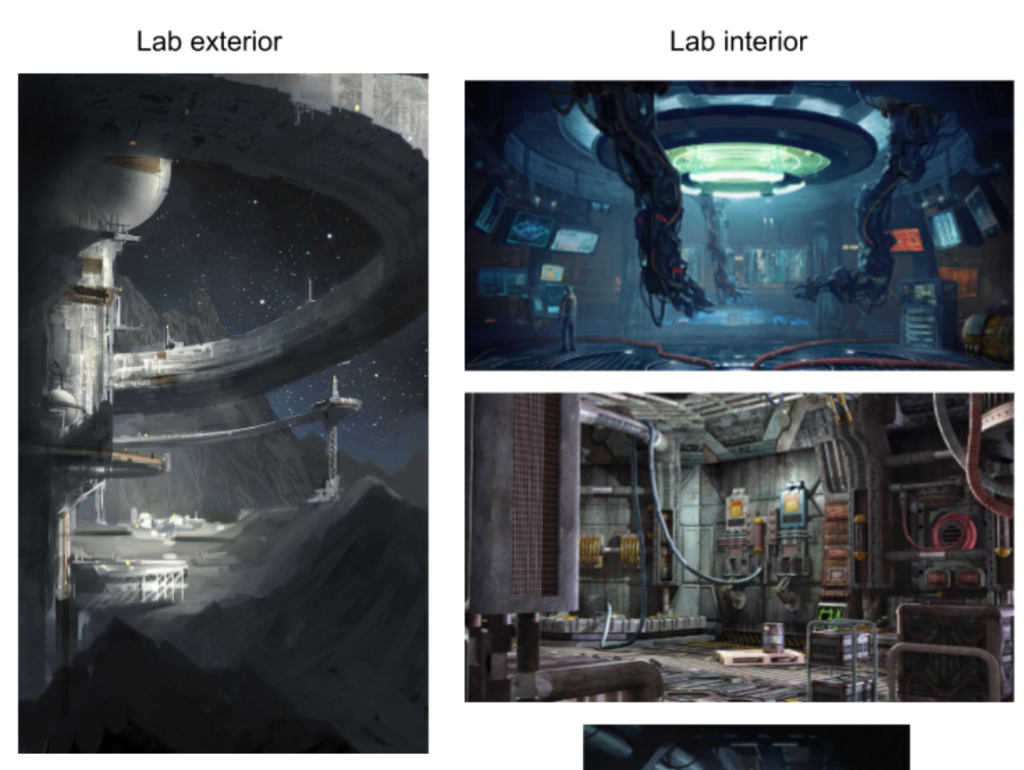
Small projects / Prototypes
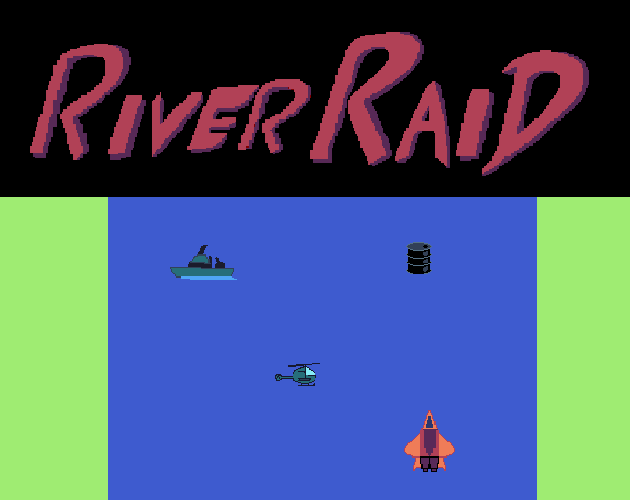
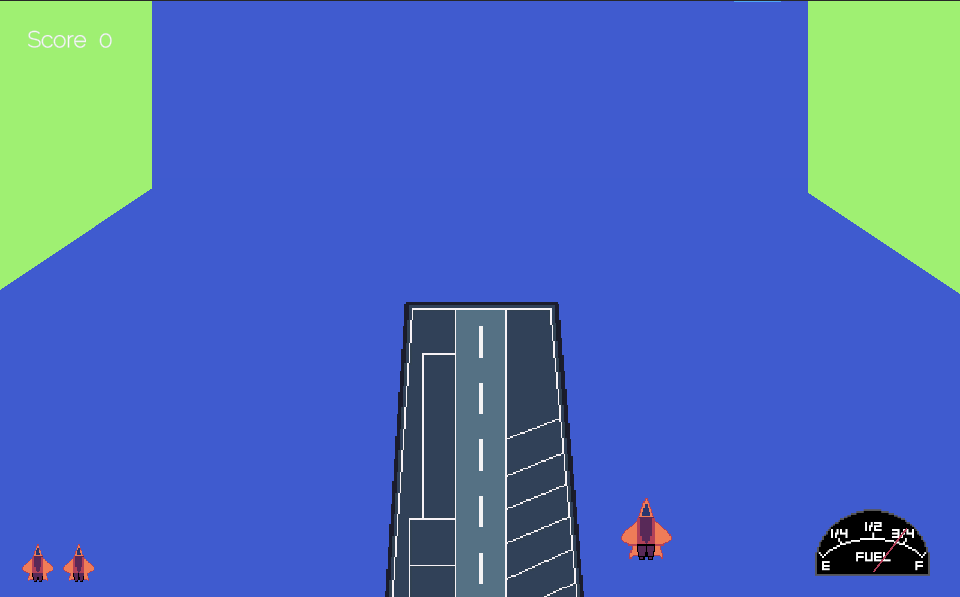
Atari game remake: River Raid
Remake of the River Raid 1962 Atari game.
- Implemented the full game in Unity.
- Created 7 levels with different layouts.
- Created all sprites and animation by hand.
- Composed and recorded the original music.
- Designed and recorded the sounds.
Atari game remake: Breakout
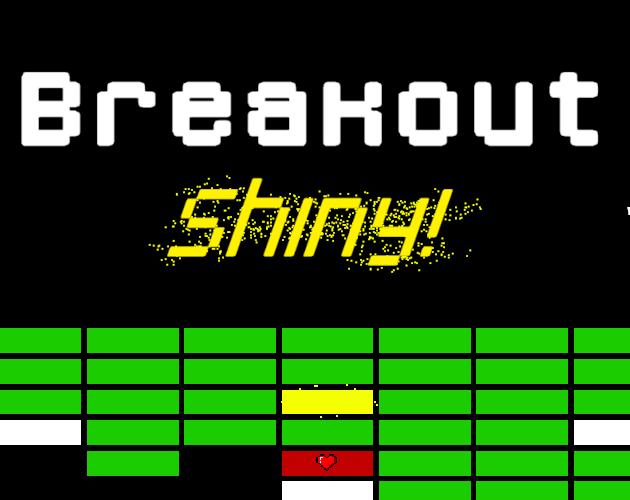
Remake of the Breakout Atari game, with a modified objective.
- Implemented the full game in Unity.
- Designed a new objective: the ball must hit a “shiny” brick to complete the level.
- Designed new bricks: extra life and unbreakable brick.
- Created 8 levels with increasing difficulty.
- Composed and recorded the original music.
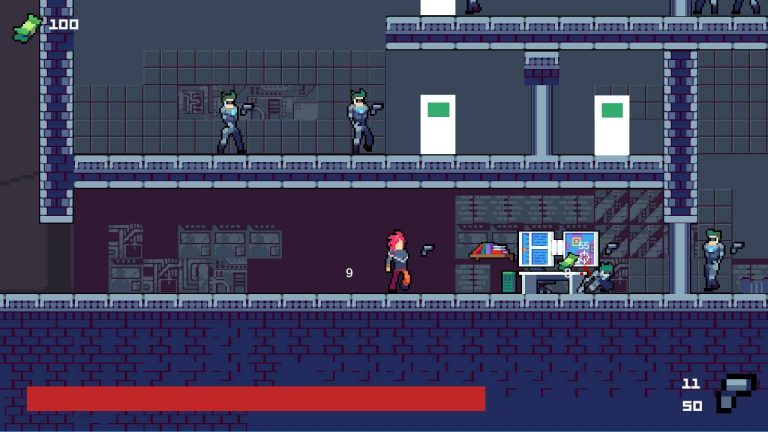
Cyberpunk side-scrolling prototype
A game prototype inspired by Cyberpunk 2077, exploring how RPG systems and branching paths can be implemented in a 2D side-scrolling game.
- Implemented the prototype in Unity.
- Designed a RPG-based shooting system using raycasting and character skills.
- Developed the AI behavior using a state machine, including player detection using sound and search patterns.
- Designed level navigation with multiple paths using access cards.
- Discontinued after 3 months of initial development.
Mecha deck-building prototype
Prototype of a deck-building card game about Mecha combat in a science-fiction dystopian setting.
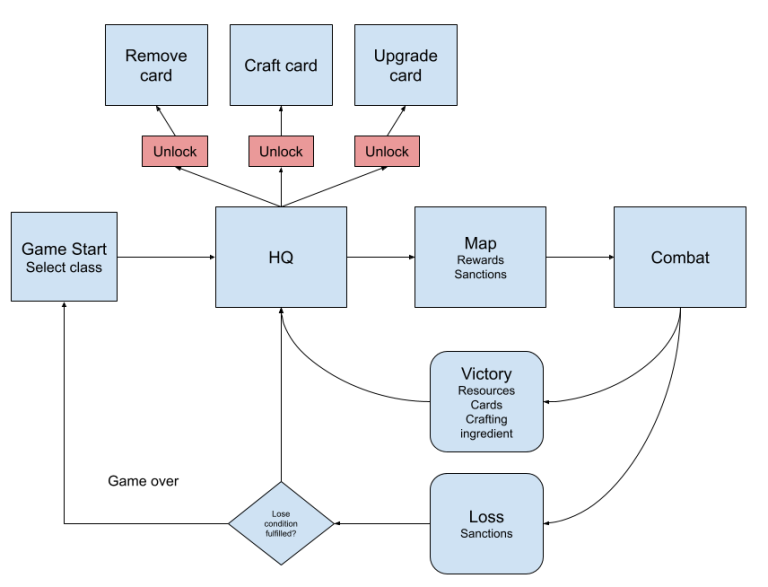
- Designed the combat system against AI opponent.
- Designed the deck-building system and the progression.
- Iterated on multiple paper prototypes to refine the mechanics.
- Designed the narrative, main character and story progression.
- The project was discontinued after evaluation in favor of exploring a different theme.